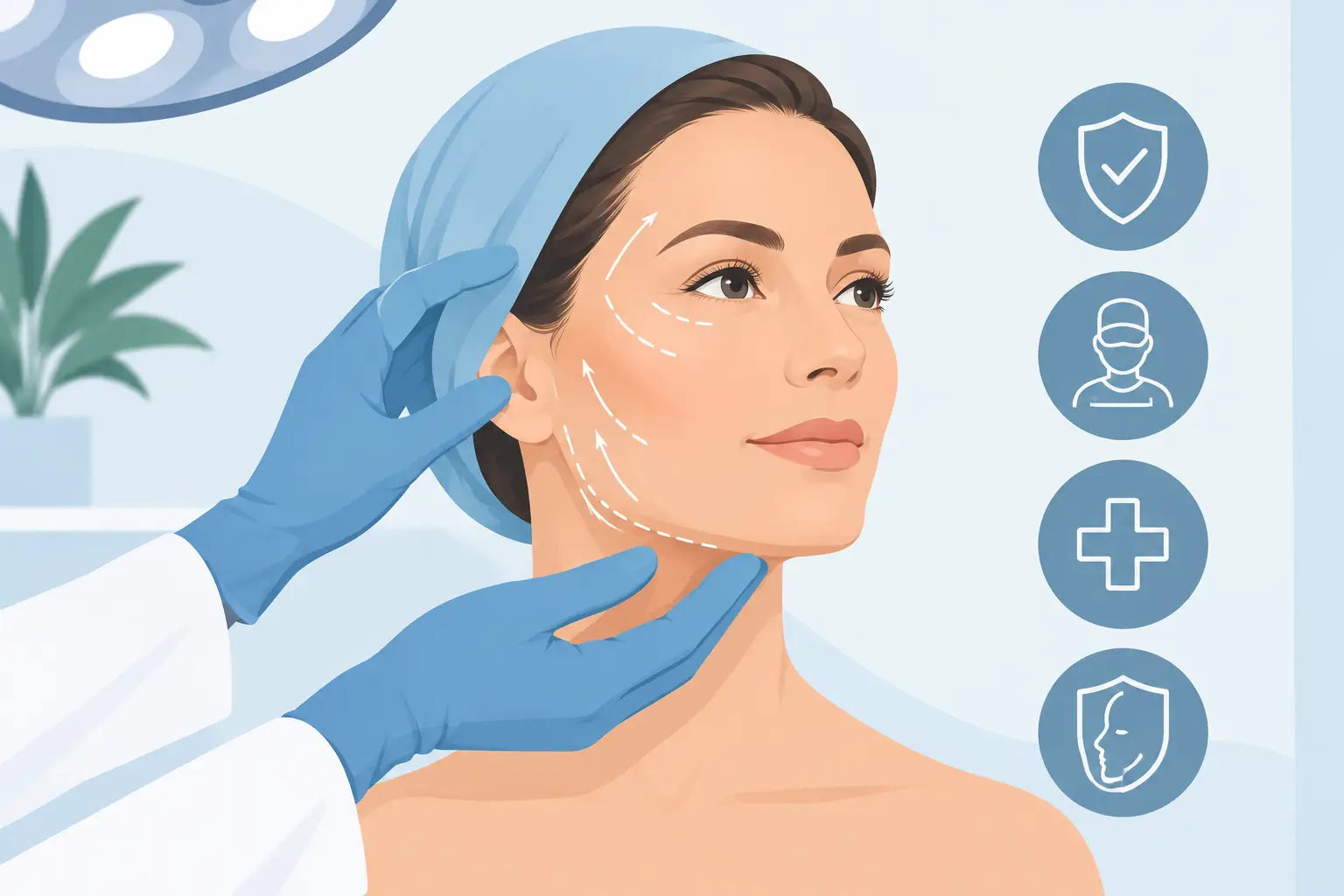
Facelift Safety Standards That Protect Your Results
A facelift is not simply a matter of lifting skin. It is a surgical procedure that reshapes deeper facial tissues, manages skin tension, and must preserve the delicate balance of blood supply, facial movement, and natural expression. That is why facelift safety standards should be central to your decision from the first consultation, not an afterthought once a treatment date has been set.
The safest choice is rarely determined by one factor alone. A qualified surgeon, a well-equipped operating environment, appropriate anesthesia, thoughtful surgical planning, and reliable aftercare all work together. These elements also support what many patients value most: a refined result that still looks like them.
Facelift safety standards start with the surgeon
A facelift should be performed by a properly trained plastic surgeon with specific experience in facial surgery. Board certification, formal surgical training, and ongoing professional education provide an important foundation, but they do not replace relevant expertise. Facial anatomy is highly individual, and each technique requires sound judgment about what is appropriate for a patient’s skin quality, bone structure, degree of laxity, and medical history.
During a consultation, the surgeon should assess more than loose skin. A careful evaluation considers the position of the cheeks, jawline definition, neck bands, facial volume, skin thickness, scars from previous procedures, and the quality of the tissues beneath the skin. They should also discuss whether a facelift alone addresses your concern or whether a different or complementary approach would be more suitable.
For example, an eyelid procedure may be more relevant for a tired appearance around the eyes, while skin treatments can improve texture and pigmentation but cannot correct significant tissue descent. In some cases, a deep plane facelift may be considered because it repositions deeper facial structures rather than relying only on skin tightening. The right technique depends on the individual, not on a trend or a single before-and-after photograph.
A responsible surgeon will also be comfortable saying no. If expectations are unrealistic, smoking cessation has not been achieved, a medical condition is not sufficiently controlled, or a less invasive treatment is the safer option, postponing or changing the plan can be the correct medical decision.
A thorough medical assessment reduces avoidable risk
Safety begins well before the operating room. Your medical history should be reviewed in detail, including previous operations, allergies, medications, supplements, clotting issues, high blood pressure, diabetes, heart or lung conditions, and a history of poor scarring or wound healing.
Some medications and supplements can increase bleeding risk or interfere with anesthesia. Others should never be stopped without guidance from the physician who prescribed them. This is why complete and accurate disclosure matters. Even products considered “natural” can affect surgery and recovery.
Nicotine use deserves particular attention. Smoking, vaping, nicotine patches, and other nicotine-containing products can impair blood flow to the skin. Because a facelift involves carefully elevating and redraping facial skin, reduced circulation may increase the risk of delayed wound healing, skin injury, infection, and unfavorable scars. A surgeon may require nicotine cessation before and after surgery and may use testing when medically appropriate.
Preoperative assessment is also the moment to discuss anesthesia. The type of anesthesia should match the procedure, your health profile, and the anticipated length and complexity of surgery. You should understand who administers the anesthesia, how you will be monitored, and what arrangements are in place if unexpected care is needed.
The operating setting matters as much as the procedure
A beautifully designed consultation room does not tell you whether an operating environment meets the necessary safety requirements. Ask where your facelift will be performed and why that setting is appropriate for your procedure.
Smaller procedures may be safely performed in a properly equipped private clinical setting when the patient and treatment are suitable. More extensive facelifts, combination procedures, or cases involving additional medical considerations may be better performed within a hospital environment. Access to hospital infrastructure can provide an added level of reassurance for larger operations and more complex care needs.
The facility should have clear protocols for sterility, patient identification, medication management, monitoring, emergency response, and transfer when necessary. Qualified staff should be present throughout the procedure and immediate recovery period. These are not luxuries. They are the operational details that allow a surgical team to respond quickly and appropriately when needed.
At Singelberg Kliniek, the choice between a discreet private clinical environment and hospital infrastructure is made according to the procedure and the patient’s individual safety needs. This reflects a principle that should guide any surgical plan: the setting must serve the patient, not the other way around.
Natural-looking results are also a safety consideration
Patients often think of safety only in terms of anesthesia, bleeding, or infection. Those risks must be addressed, but surgical restraint is also part of responsible care. An overly aggressive facelift can create excessive tension, distorted earlobes, widened scars, an unnatural hairline, or a pulled appearance that does not age gracefully.
A well-planned facelift respects the layers of the face and aims to restore proportion rather than impose a new identity. This is particularly relevant with advanced approaches such as the deep plane facelift. By working beneath the superficial muscular layer and repositioning descended tissues, the surgeon can often create a more natural contour with less dependence on skin tension. However, deeper techniques are not automatically better for every patient. They require specific expertise and careful selection.
The consultation should include an honest discussion of what surgery can and cannot achieve. A facelift can improve facial and neck laxity, redefine the jawline, and soften signs of aging. It does not stop aging, erase every line, change skin quality completely, or guarantee a result identical to an edited image. Clear expectations protect both your well-being and your satisfaction.
Recovery protocols are part of facelift safety standards
The operation is only one phase of treatment. Good postoperative care helps identify complications early and supports a smoother recovery. Before surgery, you should receive clear written instructions about medications, wound care, activity restrictions, sleeping position, showering, follow-up appointments, and how to contact the clinic outside regular hours.
Swelling, bruising, temporary numbness, and a feeling of tightness are common after a facelift. These typically improve gradually, but recovery is not identical for everyone. It is wise to allow adequate time away from work, social events, strenuous exercise, and travel. Trying to resume normal activities too quickly can increase swelling and affect healing.
You should also know which symptoms require prompt contact with your surgical team. Increasing one-sided swelling, significant pain that is not controlled by prescribed medication, persistent bleeding, fever, worsening redness, shortness of breath, chest pain, or sudden weakness should never be dismissed. While serious complications are uncommon, timely assessment is essential.
Follow-up visits allow the surgeon to monitor healing, remove sutures when appropriate, assess scar maturation, and advise when treatments such as medical-grade skin care, non-surgical skin improvement, or scar management may be suitable. A clinic that remains available after surgery demonstrates that it views the procedure as a care trajectory, not a single appointment.
Questions worth asking before you decide
A consultation should give you enough clarity to make a measured decision. Ask how often the surgeon performs facelifts and the specific technique proposed for you. Ask where the procedure will take place, who will provide anesthesia, and what monitoring and emergency protocols are used. You may also ask about the expected recovery timeline, the most relevant risks in your case, and how complications are managed should they occur.
Pay attention to how the answers are given. You should not feel pressured to book quickly or persuaded that a procedure is risk-free. No surgery is without risk. What distinguishes high-quality care is transparent discussion, individualized planning, meticulous technique, and structured follow-up.
The right facelift plan should leave you feeling informed rather than rushed. When safety, surgical expertise, and natural aesthetic judgment are given equal weight, you can approach treatment with greater confidence and a clearer sense of what is right for your face and your health.