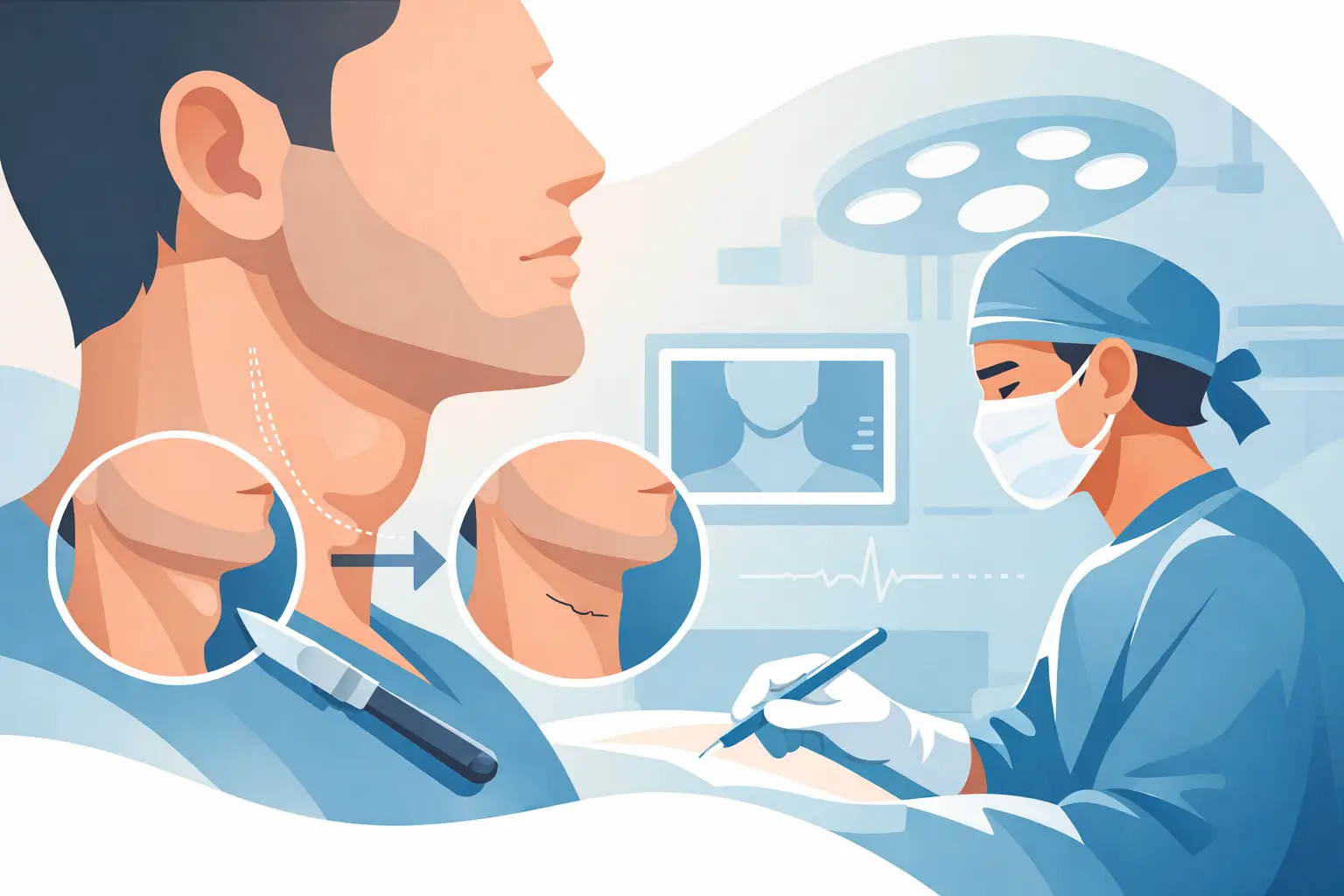
A Guide to Forehead Recontouring Surgery
A prominent brow ridge, a forehead that slopes backward, or an uneven transition from the forehead to the nose can have a strong effect on facial balance. This guide to forehead recontouring surgery explains how surgeons assess these features, which techniques may be appropriate, and why a personalized surgical plan is essential for a result that looks natural rather than operated on.
Forehead recontouring is most often considered within Facial Feminization Surgery (FFS), although it may also be appropriate after trauma, previous surgery, or for people who simply wish to soften a pronounced brow area. The goal is not to create one standard forehead shape. It is to bring the forehead, brows, eyes, hairline, and nose into better proportion with the individual face.
What forehead recontouring surgery can change
The forehead is not a flat surface. Its appearance is shaped by the frontal bone, the brow ridge, the air-filled frontal sinus behind it, the position of the eyebrows, and the hairline. In many patients seeking feminization, the area above the eyes is more projected, with a sharper transition between the forehead and nose. A softer, smoother curve can contribute substantially to a more feminine facial read.
Forehead recontouring surgery can reduce the prominence of the brow bone, reshape the central forehead, and create a more gradual contour above the eyes. Depending on the surgical plan, it may also be combined with a brow lift or hairline advancement. These procedures address related but distinct concerns: bone contour determines projection, while brow and hairline procedures influence framing and perceived forehead height.
This treatment is not designed to erase all facial structure. Over-reduction can look unnatural and may compromise safety. The most refined results preserve enough definition to suit the patient’s anatomy, age, ethnicity, and broader aesthetic goals.
Why CT imaging guides the surgical plan
A detailed consultation is the foundation of safe forehead surgery. The surgeon evaluates the forehead in relation to the entire face, rather than making decisions from a single frontal photograph. Side-profile views, brow position, skin quality, hairline density, prior procedures, and the patient’s goals all matter.
For patients with a prominent brow ridge, a CT scan is often necessary. It shows the size, shape, and position of the frontal sinus, as well as the thickness of the bone in front of it. This information determines whether simple bone reduction is possible or whether the outer wall of the frontal sinus needs to be carefully repositioned.
That distinction is critical. The frontal sinus is an anatomical air space, not a solid area of bone that can be reduced indefinitely. A surgeon who plans from imaging can choose the least invasive technique that can safely achieve the intended contour. During consultation, patients should receive a clear explanation of what their scan reveals and what this means for their expected result.
The main contouring techniques
Forehead contouring is often described using numbered types, but the practical question is simpler: how much projection is present, and how much protective bone is available in front of the sinus?
When the brow prominence is mild and the bone is sufficiently thick, the surgeon may reduce and smooth the outer bone directly. This is commonly called burring. It can be effective for selected anatomy, but it has limits. Removing too much bone in an attempt to create a completely flat forehead is not appropriate.
When the frontal sinus projects forward, a more advanced technique may be required. The surgeon temporarily removes the anterior wall of the sinus, reshapes it, and secures it in a more recessed position. The surrounding brow bone and forehead may then be contoured for a smooth transition. This approach is frequently used in FFS because it allows a meaningful reduction in projection while respecting the sinus anatomy.
Some patients require minimal bone work and benefit more from changes to the brow, hairline, or surrounding soft tissue. Others may have asymmetry that needs to be addressed conservatively. The best approach depends on anatomy, not on a preferred procedure name or a before-and-after image.
Who may be a good candidate?
Suitable candidates are adults in good general health who have realistic expectations and a stable understanding of their goals. In the context of gender affirmation, forehead recontouring can be a meaningful part of FFS for transgender women and nonbinary patients who wish to reduce masculine-coded forehead characteristics. It is equally important that every patient feels heard without pressure to pursue a particular degree of change.
The consultation should cover medical history, medications and supplements, smoking or nicotine use, previous facial surgery, sinus issues, and any history of impaired wound healing. Nicotine can affect circulation and healing, so patients are typically asked to stop all nicotine-containing products before and after surgery according to their surgeon’s instructions.
Mental and emotional readiness matter as well. Facial surgery changes a feature that is visible every day. Patients often find it helpful to discuss what they want to see in the mirror, what they do not want to lose, and whether they are considering other procedures such as rhinoplasty, eyelid surgery, or a facelift. A staged plan can sometimes be safer or more appropriate than combining every desired treatment at once.
The incision, procedure, and anesthesia
Forehead recontouring is generally performed under general anesthesia. The incision is usually placed either along the hairline or within the scalp. The choice depends on hairline position, hair density, forehead height, whether hairline advancement is planned, and the type of bone work required.
A hairline incision may allow the surgeon to lower a high hairline while accessing the forehead. A coronal incision, placed farther back in the scalp, can be a better option for some patients, especially when hairline lowering is not desired. Both approaches involve trade-offs. An incision at the hairline may make scar management more relevant, while a scalp incision can temporarily affect sensation over a wider area.
After making the incision, the surgeon carefully elevates the tissues, protects the nerves that supply forehead sensation and brow movement, and performs the planned contouring. If the sinus wall is repositioned, it is stabilized with fixation materials designed for facial bone surgery. The soft tissues are then redraped and the incision is closed with attention to natural brow position and an inconspicuous scar.
The operation length varies with the technique and whether other facial procedures are performed at the same time. Larger procedures should be carried out with appropriate anesthesia support and hospital-level infrastructure, which provides an added layer of safety for patients undergoing more extensive facial surgery.
Recovery after forehead recontouring
Swelling around the forehead, brows, and upper eyelids is expected in the first days after surgery. Bruising may extend around the eyes. The forehead can initially look higher, fuller, or less defined than expected because swelling takes time to settle. Cool compresses, head elevation, prescribed medication, and temporary activity restrictions help support early recovery.
Most patients can manage light daily activities within one to two weeks, depending on their work and the extent of surgery. Strenuous exercise, heavy lifting, and contact sports should wait until the surgeon confirms that healing is progressing appropriately. The incision may remain pink or firm for several months before it matures.
Numbness or altered sensation in the scalp and forehead is common after surgery. It often improves gradually, but recovery can take months and, in some cases, minor changes in sensation can persist. Final contour assessment also requires patience. While the bone shape is established during surgery, swelling and soft-tissue adaptation mean that the refined result develops over several months.
Risks and questions worth discussing
All surgery carries risks, including bleeding, infection, delayed healing, unfavorable scarring, anesthesia-related complications, asymmetry, and the possibility that a revision may be needed. Specific to forehead recontouring are sensory changes, temporary or persistent changes in brow movement, contour irregularities, sinus-related complications, and hairline or hair-growth concerns near the incision.
These risks should be discussed plainly, along with the steps taken to reduce them. Ask who will perform the surgery, whether CT imaging is recommended, which technique is proposed for your anatomy, where the operation will take place, and how follow-up care is organized. It is also reasonable to ask what result is realistically achievable without compromising the frontal sinus or creating an over-contoured appearance.
At Singelberg Kliniek, the most meaningful planning begins with a careful facial analysis and an honest conversation about proportion, safety, and the changes that will make the greatest difference for the individual patient. A well-planned forehead procedure should feel considered from the first consultation through long-term follow-up.
The right next step is not choosing a technique from photographs. It is choosing a qualified facial surgeon who can assess your anatomy in detail, explain the trade-offs clearly, and build a treatment plan that respects both your goals and your safety.