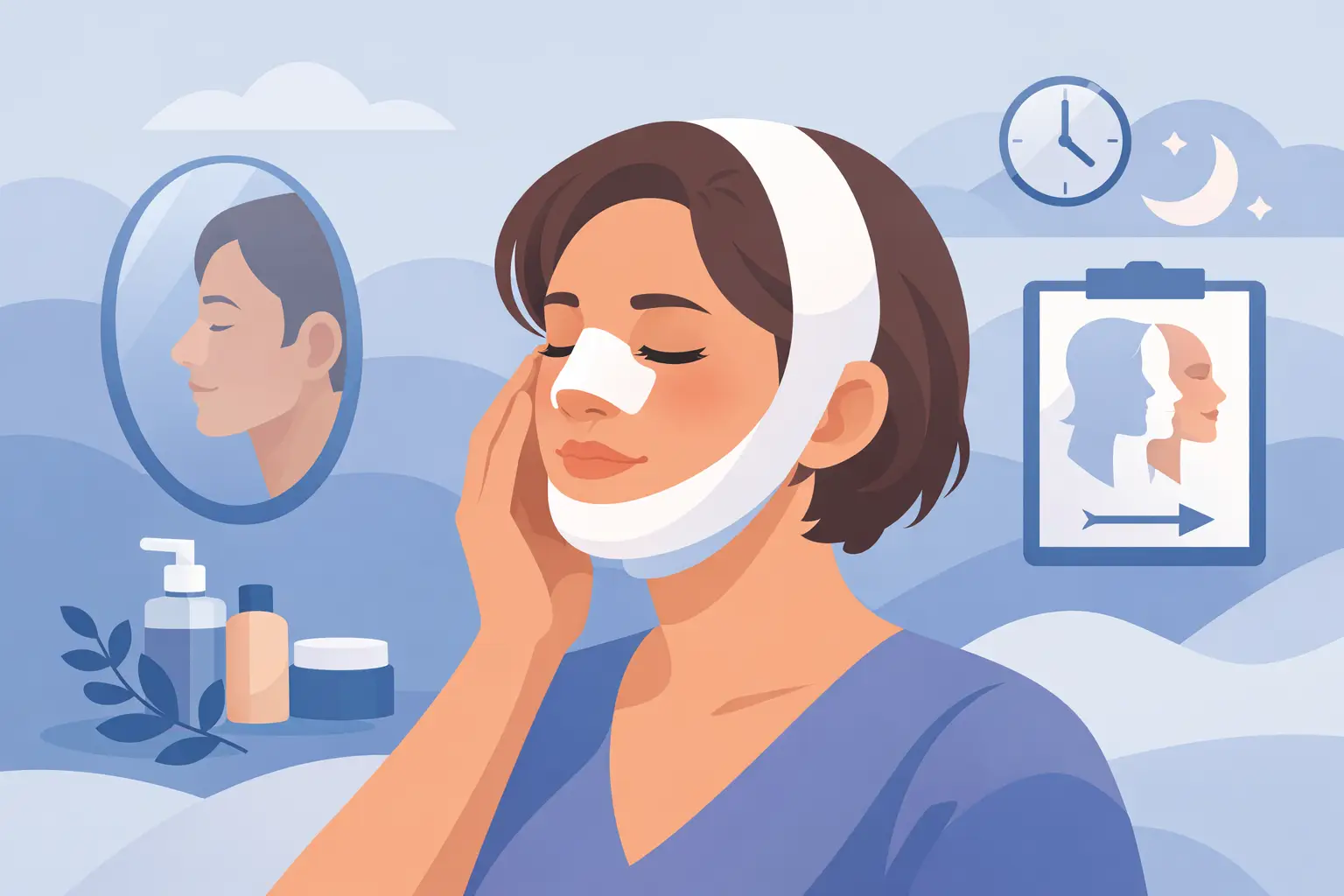
Your Guide to Facial Feminization Recovery
Facial Feminization Surgery is not one operation with one recovery path. It may involve the forehead and brow, nose, jawline, chin, hairline, lips, or neck – often in a carefully planned combination. That is why a guide to facial feminization recovery should begin with one essential principle: your healing plan must reflect the specific procedures performed, your anatomy, and your surgeon’s instructions.
Recovery asks for patience, preparation, and room in your schedule. Swelling and bruising can temporarily obscure the refined, natural changes you have chosen surgery to achieve. With attentive aftercare and realistic expectations, the recovery period becomes a structured part of the treatment journey rather than an uncertain pause.
What determines facial feminization recovery?
The extent of surgery has the greatest influence on recovery. A forehead contouring procedure with brow lift has different aftercare needs than rhinoplasty, jaw reduction, genioplasty, or a facelift. When several procedures are combined, the overall recovery period is usually longer, even if each area heals at its own pace.
Your general health, smoking status, skin quality, medication use, and tendency toward swelling also matter. Some patients feel ready for limited social contact after two to three weeks, while others prefer more time before returning to work, travel, or events. There is no benefit in comparing your timeline with someone else’s photographs or experience.
A personalized consultation should clarify which procedures are planned, where incisions will be located, whether drains or compression garments are expected, and how follow-up will be organized. For more extensive procedures, the safety and resources of a hospital setting can provide additional reassurance during the early phase of care.
The first week: rest, protection, and close follow-up
The first days after surgery are usually the most demanding. Facial swelling, bruising, tightness, numbness, and fatigue are common. If work has been performed around the forehead, scalp, jaw, or chin, you may also notice altered sensation or temporary stiffness when speaking, eating, or smiling.
Pain is generally managed with the medication prescribed by your surgical team. Take it exactly as directed, and do not add over-the-counter medication, supplements, or herbal products without approval. Some products can increase bleeding or interfere with healing.
Sleep with your head elevated, ideally on your back, to help limit swelling. Cool compresses may be appropriate for certain areas, but they should never be applied directly to numb skin or used beyond the instructions you received. Protecting incisions from pressure, friction, and accidental pulling is particularly important during this period.
You will need practical support at home. Arrange for someone to bring you home after surgery and, when advised, stay with you initially. Prepare soft foods if jaw, chin, or intraoral procedures are planned. Choose easy-to-wear clothing that does not need to be pulled over your head, and make sure you can rest without managing work, caregiving, or household demands.
Weeks two through four: visible improvement, ongoing healing
Bruising often begins to fade during the second week, while swelling becomes less intense but may shift across the face. This is a normal part of healing. One side can appear more swollen than the other, and the face may look uneven from day to day. This does not necessarily reflect the final result.
Many patients can resume desk-based work or quiet daily activities after roughly two weeks, depending on the procedures performed and how public-facing their role is. Camouflage makeup may be possible once incisions are sufficiently healed and your surgeon approves it. However, feeling physically able to leave home is not the same as being ready for all normal activities.
Strenuous exercise, heavy lifting, bending, contact sports, saunas, and hot yoga can increase swelling or bleeding risk. These activities should be reintroduced only when your surgeon gives clear permission. A short, gentle walk is often encouraged earlier because it supports circulation, but it is not a reason to rush recovery.
If your surgery included rhinoplasty, nasal breathing may remain limited for a time because of internal swelling. Following jaw or chin surgery, you may need to avoid firm foods and follow a modified diet. Scalp numbness after forehead work can persist longer than bruising, gradually improving as nerves recover.
The months that follow: when results begin to settle
Facial Feminization Surgery produces changes in bone, soft tissue, and facial balance. These tissues do not settle at the same speed. Most visible bruising resolves relatively early, but deeper swelling can take several months to improve. The nasal tip, jawline, chin, and forehead can appear subtly different as swelling recedes and tissues adapt.
It is common to experience a period of emotional adjustment. You may feel relieved and excited one day, then impatient or self-conscious the next. Temporary swelling, altered sensation, and unfamiliar reflections can be emotionally significant, especially when the surgery carries personal meaning. Give yourself permission to recover privately and consider identifying supportive people before surgery.
Scars also mature gradually. Early scars may look pink, firm, or more noticeable than expected. With time, they typically soften and fade. Sun protection is essential once your surgeon confirms it is safe. Ultraviolet exposure can darken healing scars and prolong discoloration, particularly in areas such as the hairline, nose, or jaw.
Final healing is a long process, not a single appointment. Follow-up visits allow your surgeon to assess scar maturation, symmetry, sensation, swelling, and your overall comfort. They also create space to ask questions that may only arise once you are back in your normal routine.
Everyday aftercare that supports recovery
Good recovery habits are straightforward but meaningful. Prioritize sleep, stay hydrated, and choose balanced meals with adequate protein to support tissue repair. Avoid smoking, nicotine products, and vaping before and after surgery for the period advised by your surgeon. Nicotine restricts blood flow and can seriously compromise wound healing.
Alcohol should also be avoided while taking prescription pain medication and during the early recovery period as instructed. It can worsen swelling, dehydration, and bruising. If you take anticoagulants, diabetes medication, or other long-term prescriptions, your surgical team should guide any changes rather than you adjusting medication independently.
Do not judge healing in a magnifying mirror. Take photographs only if your surgeon recommends them or if they help you see gradual progress over time. Repeated close inspection often amplifies normal asymmetry and swelling that will resolve naturally.
When to contact your surgical team
A well-organized recovery plan includes direct instructions on whom to contact outside scheduled appointments. Reach out promptly if you develop rapidly increasing swelling, severe or worsening pain, persistent bleeding, fever, unusual drainage, significant redness around an incision, shortness of breath, chest pain, or a sudden change in vision.
Not every concern indicates a complication, and asking early is always preferable to waiting. Your team can distinguish between expected healing changes and symptoms that require examination or treatment.
Planning a recovery that respects your privacy
Discretion is often an important part of facial feminization recovery. Some patients prefer to tell only a small circle of people, while others benefit from openly sharing their plans. Neither approach is inherently better. What matters is arranging enough protected time for recovery without pressure to explain visible swelling or return before you feel ready.
Before surgery, consider your calendar carefully. Avoid scheduling major social events, professional presentations, long-distance travel, or important photographs too close to the procedure. If you are traveling for care, stay nearby for the period recommended by your surgeon so early follow-up can take place safely.
At Singelberg Kliniek, recovery planning is approached as part of the treatment itself. A natural-looking outcome depends not only on precise surgery, but also on careful preparation, clear aftercare instructions, and personal follow-up throughout healing.
The most helpful thing you can bring to recovery is time. Protect it, plan for it, and let your follow-up team guide each return to activity so the changes to your face can settle with the care they deserve.