How to Sleep After Facelift Surgery Safely
The first nights after a facelift can feel unexpectedly challenging. Your face may feel tight, swollen, or tender, and a position that normally feels comfortable can suddenly feel unsuitable. Knowing how to sleep after facelift surgery helps protect the treated tissues, limit pressure on healing incisions, and make the early recovery period more manageable.
Your surgeon’s instructions always take priority. The right sleeping position and the length of time you need to maintain it depend on the extent of your procedure, whether a neck lift or additional facial procedure was performed, and your individual healing progress.
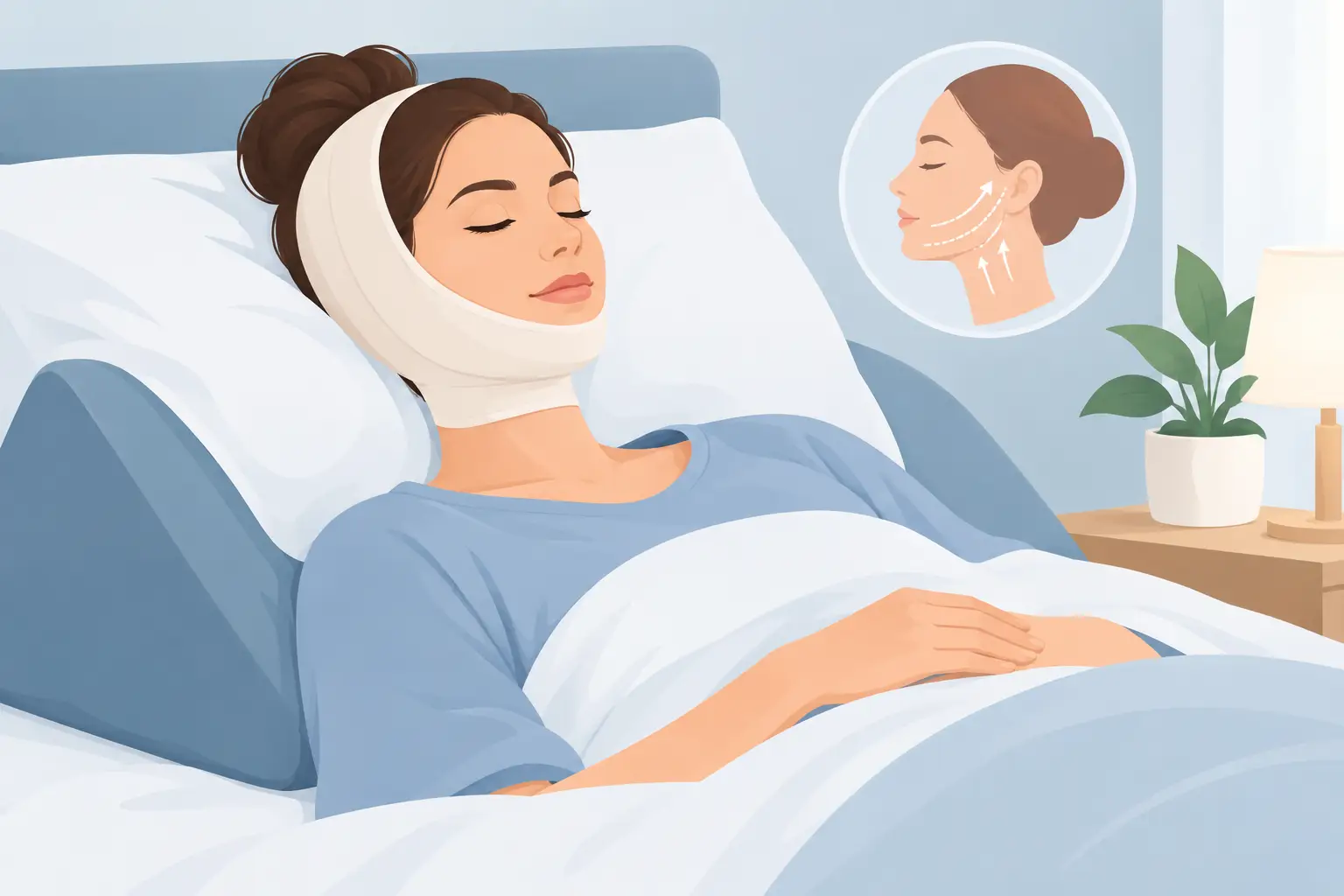
Sleep on your back with your head elevated
After facelift surgery, patients are generally advised to sleep on their back with the head and upper body elevated. A recliner can be comfortable during the first few nights, but a bed can work equally well when prepared thoughtfully.
Elevation helps reduce fluid accumulation in the face and neck. This may lessen morning swelling and throbbing, while also supporting comfort during the initial healing phase. In many cases, raising the head approximately 30 to 45 degrees is sufficient. Avoid stacking several soft pillows directly under the head, as this can bend the neck forward and create unwanted tension. Instead, support the upper back, shoulders, and head in a gradual incline.
A wedge pillow is often a practical choice because it provides more stable support than standard bed pillows. If you prefer regular pillows, arrange them firmly so they do not slide apart during the night. A small pillow beneath the knees can reduce pressure on the lower back and make back sleeping feel more natural.
How to stay on your back after facelift surgery
People who usually sleep on their side or stomach may worry that they will turn over without noticing. This is a common concern, especially when sleep is lighter because of temporary discomfort or an unfamiliar routine.
Create a gentle barrier around your body. Place pillows along both sides of your torso and under your arms to limit rolling. Some patients find that a U-shaped body pillow provides reassuring support, while others prefer two firm pillows placed beside the hips and shoulders. The goal is not to restrict your movement tightly, but to make a side position less likely and less comfortable to maintain.
It also helps to prepare the bed before surgery rather than trying to arrange it when you are tired and sore. Keep water, prescribed medication, your phone, tissues, and any postoperative supplies your surgeon recommends within easy reach. Getting up repeatedly during the night can disrupt rest and may be difficult during the first days of recovery.
If you wake up briefly on your side, do not panic. Carefully return to your back and continue resting. One accidental position change is rarely a reason for alarm, but repeated pressure on one side of the face should be avoided while the tissues are healing.
Why side and stomach sleeping should wait
Sleeping on the side can place direct pressure on the cheeks, jawline, ears, and neck. This may increase discomfort and swelling, particularly if one side is pressed into a pillow for several hours. It can also irritate incision areas around the ears or disturb delicate healing tissues.
Stomach sleeping is generally even less appropriate after a facelift because it can compress the face and require the neck to remain turned for a prolonged period. It may also make it harder to keep the head elevated.
The exact timing for returning to side sleeping differs from patient to patient. Many surgeons recommend back sleeping for at least one to two weeks, and sometimes longer when swelling, tenderness, or incision healing requires it. Do not use a calendar alone as your guide. At your follow-up appointment, your surgeon can assess whether your healing allows a gradual return to your preferred position.
Make the bedroom support recovery
A calm, cool room can make a meaningful difference when your face feels warm or swollen. Choose lightweight bedding, keep the room comfortably cool, and wear a front-opening sleep shirt if pulling clothing over your head feels difficult. Avoid anything that rubs against dressings, drains, or sensitive areas near the ears and neck.
Protect your pillows with clean pillowcases and change them regularly. A soft, smooth pillowcase may feel more comfortable against the skin, but it should not be mistaken for a substitute for correct positioning. Support and pressure reduction remain the priorities.
For the first several nights, it may be helpful to have a partner, family member, or trusted friend nearby, particularly if you have had anesthesia, are taking prescription pain medication, or feel unsteady when standing. They can assist with meals, medication timing, and small practical tasks that would otherwise interrupt your rest.
Manage discomfort without compromising sleep position
Some tightness, swelling, bruising, and mild sleep disruption are expected after a facelift. Use pain medication only as prescribed or approved by your surgeon. If medication is needed, taking it as directed before bedtime may prevent discomfort from waking you later in the night.
Avoid alcohol and unapproved sleep aids during the early recovery period. Alcohol can worsen swelling, interact with pain medication, and impair judgment. Over-the-counter sleep products may also be inappropriate when combined with prescribed medications or when they leave you groggy and less steady on your feet. If sleep is difficult, ask your surgical team what is safe for your specific situation.
Cold compresses may be recommended in some circumstances, but they must be used carefully and only according to your surgeon’s instructions. Never place excessive cold or pressure directly over numb skin, fresh incisions, or areas with reduced sensation. In some facelift techniques, particularly when the neck has also been treated, individualized postoperative instructions matter greatly.
Small habits that improve nighttime comfort
Try to maintain a simple evening routine. Have a light meal, take approved medication at the planned time, complete any wound-care steps you were given, and settle into your supported position before you become overly tired. Avoid late-night salty foods, as excess sodium can contribute to fluid retention and make facial swelling more noticeable the next morning.
Gentle walking during the day, as advised by your surgeon, can also support circulation and help you sleep more comfortably at night. This does not mean exercise. In the early phase, strenuous activity, bending, heavy lifting, and anything that raises blood pressure should be avoided because these can worsen swelling or bleeding risk.
When sleep problems need medical advice
Poor sleep alone is common in the first few days after surgery. However, severe or increasing pain, sudden one-sided swelling, rapidly expanding bruising, active bleeding, shortness of breath, chest pain, fever, or drainage with an unpleasant odor should be reported promptly to your surgical team. These symptoms are not something to manage by changing pillows or waiting for a better night’s rest.
Contact your surgeon as well if your bandage feels excessively tight, if you are unsure how to position yourself with drains or dressings, or if medication side effects are preventing adequate rest. Personalized postoperative guidance is part of safe recovery, not an inconvenience.
Returning to normal sleep positions
The transition back to side sleeping should be gradual and based on your surgeon’s approval. Even once you are cleared to lie on your side, use a supportive pillow and pay attention to tenderness around the ears, cheeks, and neck. If a position causes pulsing, pressure, or increased swelling the following morning, return to back sleeping with elevation for a few more nights.
A facelift is designed to restore a refreshed, natural-looking facial contour. Giving your body the right conditions to heal is part of protecting that result. A well-prepared sleeping arrangement, patience with temporary routines, and close adherence to your postoperative plan allow comfort and confidence to return step by step.

